

Integrity
FLOORING PROFILE TO MINIMISE PEAKING
With higher density backsawn hardwoods that are installed in moderate to more humid localities there are concerns with peaking in the floor. This produces a pressure related cupped appearance in a floor that often needs to be sanded out to achieve a flat floor or if more severe has in some instances resulted in the floor being replaced. Following research it is considered that the common 80 x 19mm and 130 x 19mm profiles as outlined in AS 2796 Timber – Hardwood – Sawn and milled products can be redesigned to make the floor less prone to peaking under expansion pressure.
Note that this information sheet has been developed for consideration by flooring manufacturers of higher density timbers mainly in Queensland and New South Wales.
Overview of Peaking
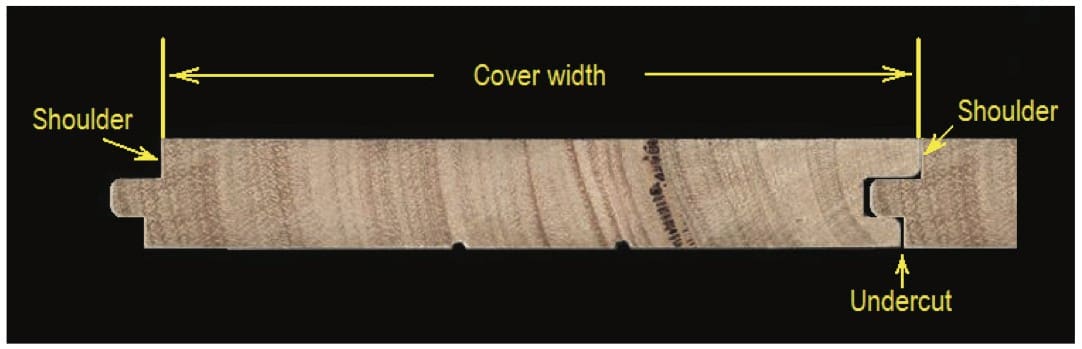
The diagram shows one of the current profiles of a 130 x 19 mm floorboard. When the two shoulders of the board meet at the top of the board there is a small gap at the bottom of the board known as undercut or relief. This minimises any gapping at board edges when a floor is laid.
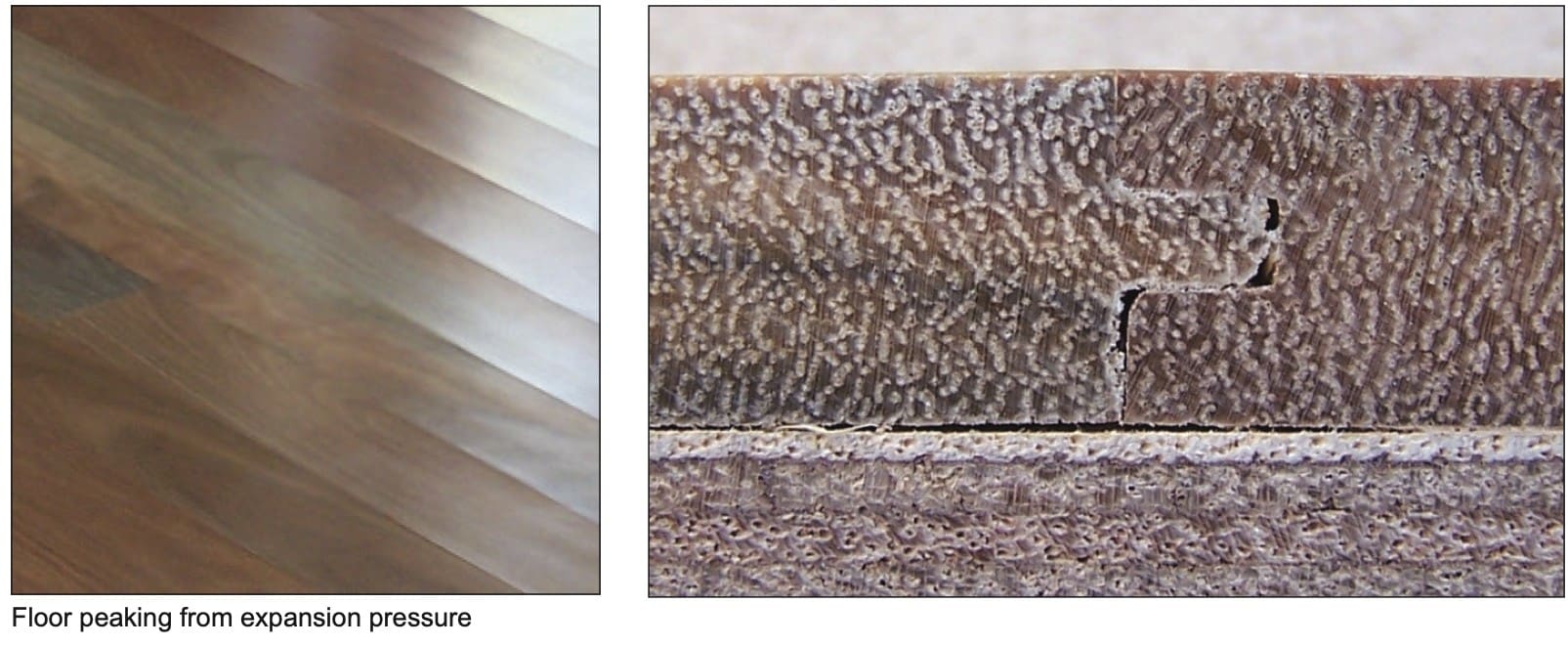
ATFA profile for reduced peaking
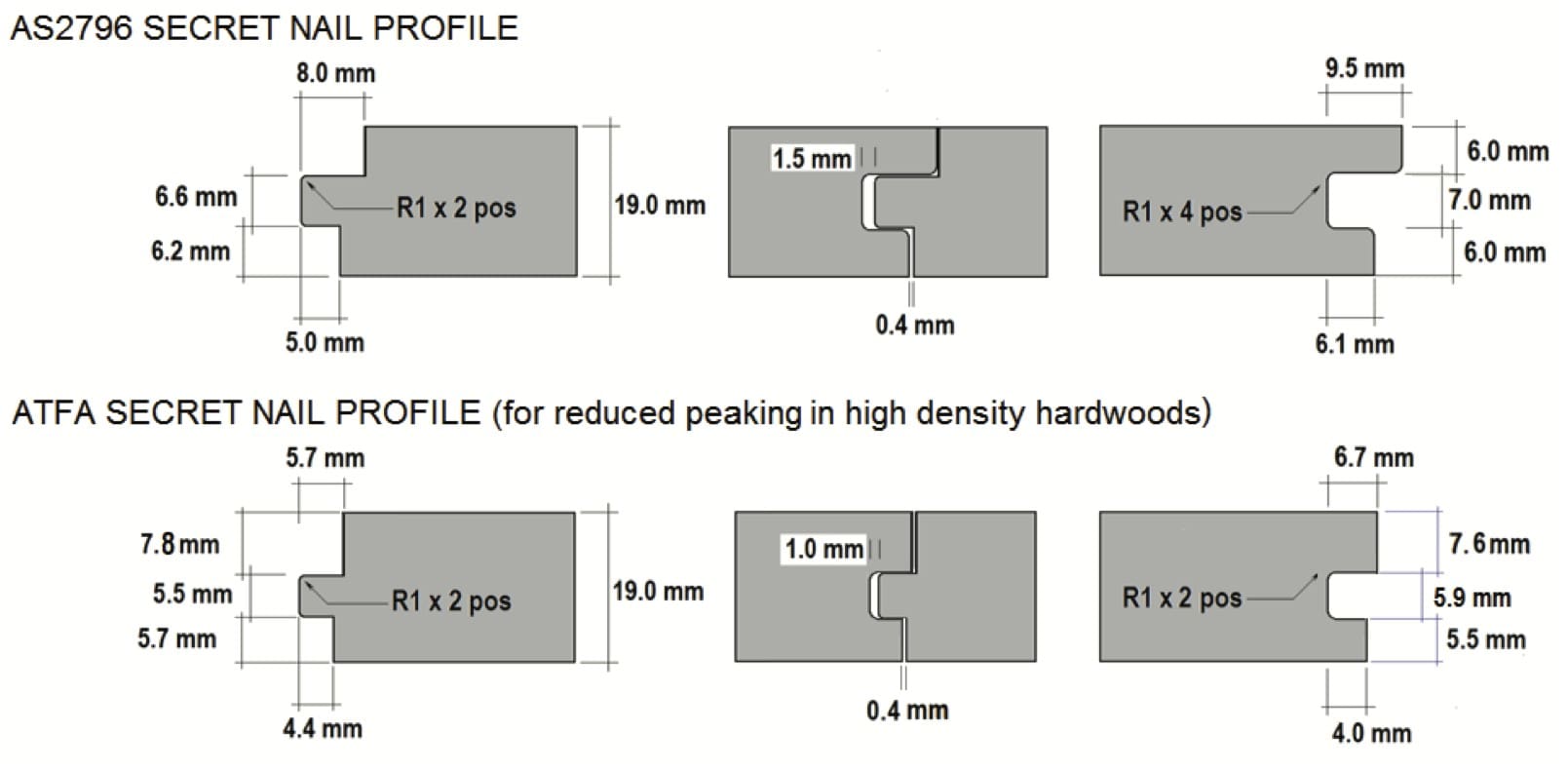
Following research, aspects of the current profile were assessed and a revised profile that is less prone to peaking has been developed. The current AS2796 profile and the ATFA profile for consideration by manufacturers is shown below.
CUPPING, PEAKING AND CROWNING IN SOLID TIMBER FLOORING
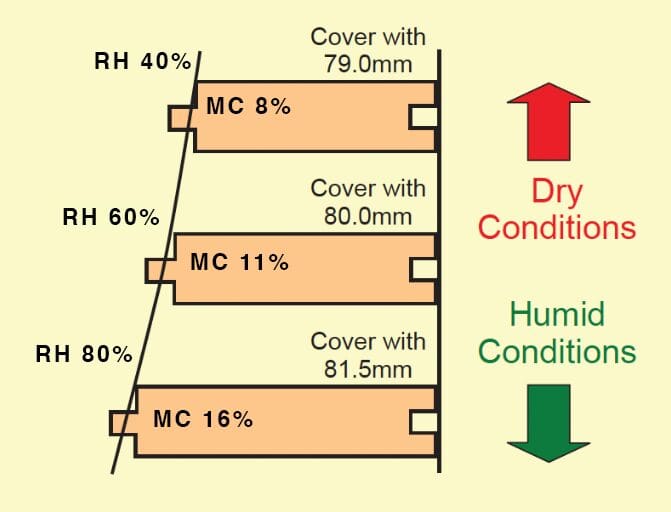
The relationship between relative humidity (RH), moisture content (MC) and board width.
Moisture content and movement
It is important to understand that timber that has been dried for solid flooring still has some moisture in it, and also that board dimensions change throughout the year in response to changes in air relative humidity.
Under more humid conditions a floor will absorb moisture, raising its moisture content; and in drier lower relative humidity conditions, a floor will release moisture back to the air, with a corresponding reduction in moisture content. When moisture contents increase, boards expand and with a decrease in moisture content they shrink. This principle is shown in the adjacent diagram.
With seasonal weather changes, we observe movement in our floors and gaps often developing during those drier times of the year and then closing during more humid times.
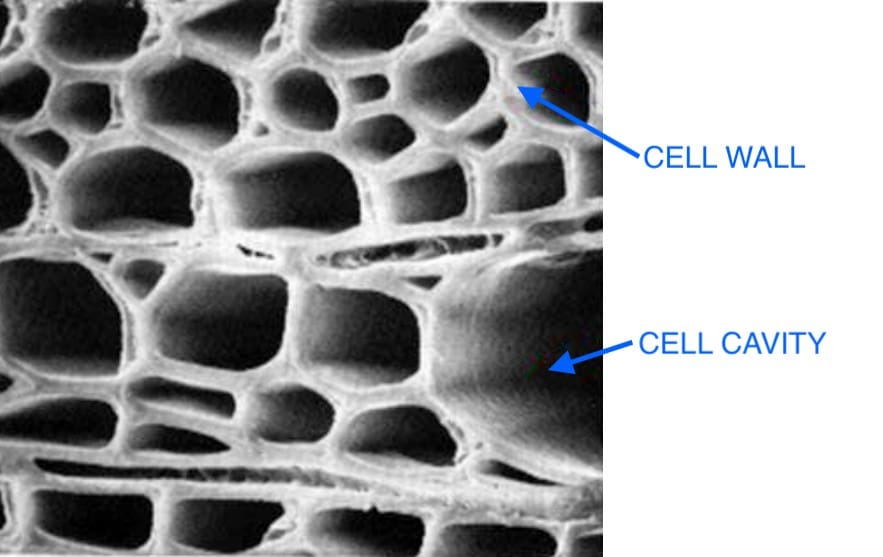
Cell structure as viewed from the board end